Buy gaertnerei.info ?
We are moving the project
gaertnerei.info .
Are you interested in purchasing the domain
gaertnerei.info ?
domain@kv-gmbh.de · 0541-91531010
Buy gaertnerei.info ?
Is decarbonization of the global economy without CO2 emissions ever possible?
Decarbonization of the global economy without CO2 emissions is theoretically possible through the use of renewable energy sources such as solar, wind, and hydro power. However, achieving complete decarbonization without any CO2 emissions would require significant advancements in technology, infrastructure, and policy changes. It would also necessitate a shift towards sustainable practices in industries such as transportation, agriculture, and manufacturing. While it may be a challenging goal to achieve, with concerted efforts and investments, it is possible to move towards a decarbonized global economy with minimal CO2 emissions. **
Is planting trees as mixed forests the best choice for passive decarbonization and addressing CDR symptoms in the atmosphere?
Planting trees as mixed forests can be a good choice for passive decarbonization and addressing symptoms of carbon dioxide removal (CDR) in the atmosphere. Mixed forests have higher biodiversity, which can enhance ecosystem resilience and provide additional benefits such as improved soil health and increased habitat for wildlife. However, the effectiveness of mixed forests in sequestering carbon may vary depending on factors such as tree species composition, management practices, and local environmental conditions. It is important to consider a combination of strategies, including reforestation with mixed forests, to effectively address the challenges of climate change and carbon sequestration. **

Similar search terms for Decarbonization
Top-Angebote
Products related to Decarbonization:
-
2 PCS Artificial Lavender Topiaries w/Elegant Flowers & Cement Pots - Green & Purple & BlackBring the beauty of nature indoors with our artificial lavender topiaries!This elegant potted plant features a lifelike spherical shape, complete with leaves and vibrant blooming lavender, creating an appealing look that enhances any space.112,99 $*Shipping: 0,00 $Secure redirect to the provider
-
Mercer41 Plants & Flowers Wall Decor Gold 50cm H X 127cm WMeasuring 127×50×5cm, this large wall art makes an ideal wall decoration for living room or any spacious area. It adds balance and refined style to blank walls, instantly enhancing your interior with stunning metal wall art craftsmanship This elegant wall art for living room doubles as a meaningful gift for loved ones. Perfect for housewarmings, anniversaries, holidays, or special occasions, it’s a beautiful way to show you care through timeless wall decorations. Crafted from premium iron, this metal artwork for wall features vivid colors and fine details. It’s rust-resistant, durable, and requires no assembly—just a striking piece of metal wall art ready to impress. Whether in bedrooms, dining rooms, or as wall decor for living room, this design adds elegance and charm. Its classic style blends into any theme, making it one of the most versatile metal wall art for living room options available. Brand Name: Mercer41.179,99 £*Shipping: 0,00 £Secure redirect to the provider



-
Are plastic pots okay for plants?
Plastic pots can be okay for plants as they are lightweight, durable, and come in a variety of sizes and shapes. However, it is important to choose a plastic pot with drainage holes to prevent waterlogging and root rot. Additionally, plastic pots can retain more heat than other materials, so they may not be suitable for plants that are sensitive to temperature fluctuations. Overall, plastic pots can be a good option for many plants, but it's important to consider the specific needs of the plant and the environment in which it will be grown. **
-
Is planting trees as mixed forests the best choice for passive decarbonization and treatment of CDR symptoms in the atmosphere?
Planting trees as mixed forests can be a good choice for passive decarbonization and treatment of CDR symptoms in the atmosphere. Mixed forests have higher biodiversity and can sequester more carbon compared to monoculture forests. They also provide additional benefits such as improved soil health, water retention, and habitat for wildlife. However, it is important to consider the specific context and goals of the reforestation project to determine if planting mixed forests is the best choice for achieving desired outcomes. **
-
What is the difference between plants with covered seeds and plants with naked seeds?
Plants with covered seeds, such as flowering plants, have seeds enclosed within a fruit or seed pod. This provides protection and helps with seed dispersal. On the other hand, plants with naked seeds, like conifers and cycads, have seeds that are not enclosed within a fruit. These plants rely on other methods, such as wind or animals, for seed dispersal and protection. **
-
Can you plant flowers in pots in February?
Yes, you can plant flowers in pots in February, depending on the climate and the type of flowers you want to plant. In some regions, February may still be too cold for certain flowers, but for hardy annuals and perennials, it can be a good time to start planting. Be sure to choose flowers that are suitable for the current weather conditions and consider using a greenhouse or providing protection for the pots if the weather is still quite cold. Additionally, consider starting seeds indoors and then transplanting them into pots once the weather warms up. **


Do woodlice harm plants in flower pots?
Woodlice are not harmful to plants in flower pots. They primarily feed on decaying organic matter, such as dead leaves and wood, and do not typically consume healthy plant material. In fact, woodlice can be beneficial to the soil in flower pots as they help break down organic matter, aiding in the decomposition process and improving soil quality. Therefore, there is no need to worry about woodlice harming plants in flower pots. **
Could we become climate neutral by 2050 with the help of decarbonization, Carbon Capture and Storage (CCS), and Carbon Dioxide Removal (CDR)?
Achieving climate neutrality by 2050 is possible with a combination of decarbonization, Carbon Capture and Storage (CCS), and Carbon Dioxide Removal (CDR) technologies. Decarbonization involves reducing emissions at the source, while CCS captures carbon dioxide emissions from industrial processes and stores them underground. CDR technologies, such as afforestation and direct air capture, remove carbon dioxide from the atmosphere. By implementing these strategies in conjunction with each other, we can work towards achieving climate neutrality by 2050. However, it will require significant global cooperation, investment, and policy support to reach this goal. **
Top-Angebote
Products related to Decarbonization:
-
DK Children The Secret World of Plants: Tales of More Than 100 Remarkable Flowers, Trees, and Seeds by Ben Hoare (DK Treasures)A timeless treasury of more than 100 stories from the incredible kingdom of plants, told by author and nature expert Ben Hoare. Plants are found almost everywhere on Earth, but to many people, their lives are a mystery. Learn how seagrass flowers underwater, how the Venus flytrap counts to make sure it catches its prey, and why some tulips used to cost more than a house! This fascinating book for kids explores the vast plant kingdom and explains how plants work, as well as the weird and wonderful relationships they have with animals. Children can discover the secrets of more than 100 amazing plants in this treasury of fascinating flora, as well as the essentials of plant science, including photosynthesis, pollination, and germination. Each species is shown with remarkable photography and beautiful illustrations, all brought to life by Ben Hoare's writing, filled with charm and infectious enthusiasm. This nature book for children ages 7+ features:- An eye-catching holographic cover, gilded edges, and stunning photography and illustrations, making it the perfect gift - A wide range of incredible plants and trees from all around the world- Illustrated diagrams to support definitions of different types of plants - Introductory reference pages that explain key topics such as photosynthesisThis book is a must for any child interested in the natural world and the plants that grow in it. Plants provide us with food, fuel, and medicine, and without them, life as we know it would not exist. From orchids that grow vanilla pods to leaves that look like stones, and from bamboo that can be made into clothes to moss that soaks up vast amounts of carbon dioxide, plants shape our world in an endless variety of ways.13,99 £*Shipping: 2,99 £Secure redirect to the provider
-
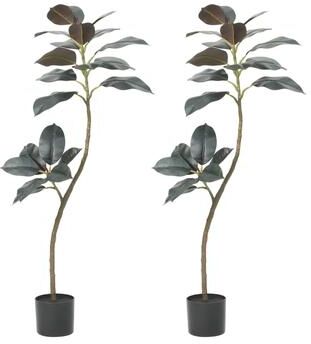
Garvee 2-Pack 4 ft PU Black Rubber Tree Faux Plants in Pots – Realistic2-PACK SET: Includes 2 artificial black rubber trees, each measuring approximately 47 inches (4 ft) tall from base to top, making them ideal for floor placement in living rooms, offices, and entryways.83,49 $*Shipping: 0,00 $Secure redirect to the provider
-
2 PCS Artificial Lavender Topiaries w/Elegant Flowers & Cement Pots - Green & Purple & BlackBring the beauty of nature indoors with our artificial lavender topiaries!This elegant potted plant features a lifelike spherical shape, complete with leaves and vibrant blooming lavender, creating an appealing look that enhances any space.112,99 $*Shipping: 0,00 $Secure redirect to the provider
-
Is decarbonization of the global economy without CO2 emissions ever possible?
Decarbonization of the global economy without CO2 emissions is theoretically possible through the use of renewable energy sources such as solar, wind, and hydro power. However, achieving complete decarbonization without any CO2 emissions would require significant advancements in technology, infrastructure, and policy changes. It would also necessitate a shift towards sustainable practices in industries such as transportation, agriculture, and manufacturing. While it may be a challenging goal to achieve, with concerted efforts and investments, it is possible to move towards a decarbonized global economy with minimal CO2 emissions. **
-
Is planting trees as mixed forests the best choice for passive decarbonization and addressing CDR symptoms in the atmosphere?
Planting trees as mixed forests can be a good choice for passive decarbonization and addressing symptoms of carbon dioxide removal (CDR) in the atmosphere. Mixed forests have higher biodiversity, which can enhance ecosystem resilience and provide additional benefits such as improved soil health and increased habitat for wildlife. However, the effectiveness of mixed forests in sequestering carbon may vary depending on factors such as tree species composition, management practices, and local environmental conditions. It is important to consider a combination of strategies, including reforestation with mixed forests, to effectively address the challenges of climate change and carbon sequestration. **
-
Are plastic pots okay for plants?
Plastic pots can be okay for plants as they are lightweight, durable, and come in a variety of sizes and shapes. However, it is important to choose a plastic pot with drainage holes to prevent waterlogging and root rot. Additionally, plastic pots can retain more heat than other materials, so they may not be suitable for plants that are sensitive to temperature fluctuations. Overall, plastic pots can be a good option for many plants, but it's important to consider the specific needs of the plant and the environment in which it will be grown. **
-
Is planting trees as mixed forests the best choice for passive decarbonization and treatment of CDR symptoms in the atmosphere?
Planting trees as mixed forests can be a good choice for passive decarbonization and treatment of CDR symptoms in the atmosphere. Mixed forests have higher biodiversity and can sequester more carbon compared to monoculture forests. They also provide additional benefits such as improved soil health, water retention, and habitat for wildlife. However, it is important to consider the specific context and goals of the reforestation project to determine if planting mixed forests is the best choice for achieving desired outcomes. **
Similar search terms for Decarbonization
-
Mercer41 Plants & Flowers Wall Decor Gold 50cm H X 127cm WMeasuring 127×50×5cm, this large wall art makes an ideal wall decoration for living room or any spacious area. It adds balance and refined style to blank walls, instantly enhancing your interior with stunning metal wall art craftsmanship This elegant wall art for living room doubles as a meaningful gift for loved ones. Perfect for housewarmings, anniversaries, holidays, or special occasions, it’s a beautiful way to show you care through timeless wall decorations. Crafted from premium iron, this metal artwork for wall features vivid colors and fine details. It’s rust-resistant, durable, and requires no assembly—just a striking piece of metal wall art ready to impress. Whether in bedrooms, dining rooms, or as wall decor for living room, this design adds elegance and charm. Its classic style blends into any theme, making it one of the most versatile metal wall art for living room options available. Brand Name: Mercer41.179,99 £*Shipping: 0,00 £Secure redirect to the provider
-
"2 PCS 21.5"" Art Rose Topiaries w/Red Flowers & Cement-Filled Pots - Green & Red & Black"Bring the beauty of nature indoors with our artificial rose topiaries!This elegant potted plant features a lifelike spherical shape, complete with leaves and vibrant roses, creating an appealing look that enhances any space.89,49 $*Shipping: 0,00 $Secure redirect to the provider
-
ClassicLiving Traditional Plants & Flowers Wall Decor Gold 69cm H X 39cm WGlamorous wall decoration with a floral design. This metal wall art will make your living room shine. The floral design with a metallic shimmering look attracts everyone's attention. With a golden shimmer. Brand Name: ClassicLiving.82,99 £*Shipping: 0,00 £Secure redirect to the provider
-
What is the difference between plants with covered seeds and plants with naked seeds?
Plants with covered seeds, such as flowering plants, have seeds enclosed within a fruit or seed pod. This provides protection and helps with seed dispersal. On the other hand, plants with naked seeds, like conifers and cycads, have seeds that are not enclosed within a fruit. These plants rely on other methods, such as wind or animals, for seed dispersal and protection. **
-
Can you plant flowers in pots in February?
Yes, you can plant flowers in pots in February, depending on the climate and the type of flowers you want to plant. In some regions, February may still be too cold for certain flowers, but for hardy annuals and perennials, it can be a good time to start planting. Be sure to choose flowers that are suitable for the current weather conditions and consider using a greenhouse or providing protection for the pots if the weather is still quite cold. Additionally, consider starting seeds indoors and then transplanting them into pots once the weather warms up. **
-
Do woodlice harm plants in flower pots?
Woodlice are not harmful to plants in flower pots. They primarily feed on decaying organic matter, such as dead leaves and wood, and do not typically consume healthy plant material. In fact, woodlice can be beneficial to the soil in flower pots as they help break down organic matter, aiding in the decomposition process and improving soil quality. Therefore, there is no need to worry about woodlice harming plants in flower pots. **
-
Could we become climate neutral by 2050 with the help of decarbonization, Carbon Capture and Storage (CCS), and Carbon Dioxide Removal (CDR)?
Achieving climate neutrality by 2050 is possible with a combination of decarbonization, Carbon Capture and Storage (CCS), and Carbon Dioxide Removal (CDR) technologies. Decarbonization involves reducing emissions at the source, while CCS captures carbon dioxide emissions from industrial processes and stores them underground. CDR technologies, such as afforestation and direct air capture, remove carbon dioxide from the atmosphere. By implementing these strategies in conjunction with each other, we can work towards achieving climate neutrality by 2050. However, it will require significant global cooperation, investment, and policy support to reach this goal. **
* All prices are inclusive of VAT and, if applicable, plus shipping costs. The offer information is based on the details provided by the respective shop and is updated through automated processes. Real-time updates do not occur, so deviations can occur in individual cases. ** Note: Parts of this content were created by AI.